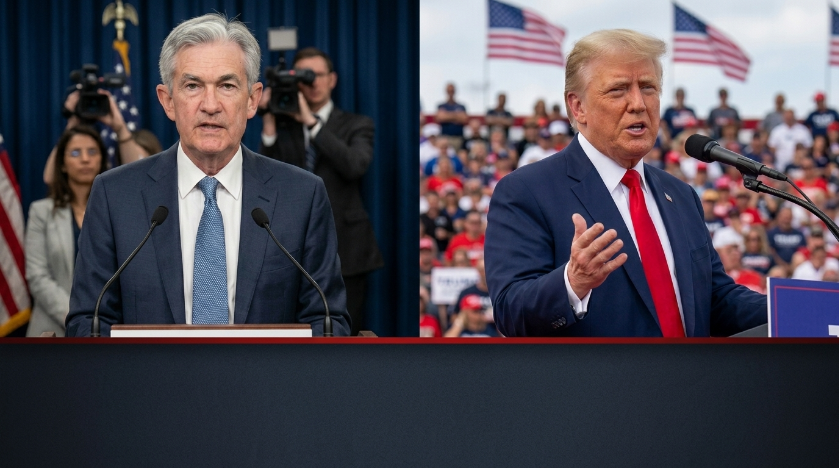
WASHINGTON — August 14, 2026 — The Federal Reserve is facing a difficult decision over interest rates as new economic data show inflation beginning to cool while the U.S. labor market shows signs of weakening.
The latest developments have reduced expectations that the Fed will immediately raise interest rates, but policymakers remain divided over whether inflation is still too high to begin easing monetary policy.
Inflation Is Finally Showing Signs of Cooling
Recent data have provided some relief for policymakers.
Consumer prices increased 3.4% over the year in July, slightly lower than the 3.5% annual increase recorded in June. Producer prices also remained unchanged in July, another sign that some price pressures may be easing.
That has weakened the case for an immediate rate increase.
But inflation remains well above the Federal Reserve’s long-term 2% target, meaning officials cannot simply declare victory.
The Jobs Market Is Adding Another Complication
At the same time, the labor market has shown signs of losing momentum.
Recent employment data have raised concerns about weaker hiring and slower wage growth. That creates a difficult situation for the Fed: keeping rates high can help control inflation, but excessively tight monetary policy could put additional pressure on employment and economic growth.
The result is a balancing act that could affect millions of Americans.
What Could Happen to Interest Rates?
The Federal Reserve has already kept its benchmark interest-rate range unchanged at 3.50% to 3.75%.
Markets are now increasingly expecting policymakers to remain cautious rather than immediately raising rates again, although the possibility of another increase later in the year has not disappeared.
That uncertainty matters because interest rates influence mortgages, car loans, credit cards, business borrowing and other major financial decisions.
Mortgage Rates Are Already Being Watched Closely
For Americans hoping to buy or refinance a home, the interest-rate debate is especially important.
Mortgage rates have recently edged lower, but they remain elevated. Reuters reported that the average U.S. 30-year mortgage rate was around 6.7%, keeping borrowing costs high for prospective homeowners.
A meaningful decline in borrowing costs could provide relief for buyers who have been waiting on the sidelines.
Trump Wants Lower Rates
President Donald Trump has repeatedly pushed the Federal Reserve toward lower interest rates, arguing that cheaper borrowing would help stimulate the economy.
But the central bank is expected to make its decisions based on inflation, employment and broader economic conditions rather than political pressure.
That creates another source of tension as the Fed prepares for its next major policy decisions.
The Decision Could Affect Everyday Americans
The interest-rate debate might sound like a Wall Street story, but the consequences can reach directly into American households.
Lower rates can eventually make mortgages, auto loans and other forms of borrowing cheaper.
Higher rates, meanwhile, can increase monthly payments and discourage major purchases.
That is why millions of Americans will be watching closely as the Federal Reserve weighs its next move.
What Happens Next?
For now, the Fed appears to be in wait-and-see mode.
Cooling inflation gives policymakers more room to avoid another immediate rate increase, while a softer labor market could increase pressure for eventual rate cuts.
But inflation remains above target, and rising energy prices connected to the continuing Middle East conflict could complicate the outlook again.
The next major economic reports could therefore determine whether Americans move closer to lower borrowing costs — or face another period of elevated interest rates.
For millions of Americans, the question is simple: Will the Fed finally give borrowers some relief, or will inflation force rates to stay high?