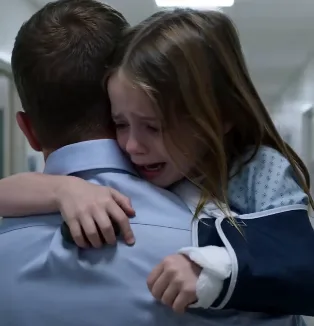
I filed for emergency temporary custody.
That was appropriate.
Then I went too far.
My attorney, Felicia Grant, drafted a narrow petition.
Lucy temporarily with me.
Wade no contact.
Claire permitted unrestricted contact in a safe location while protective orders were addressed.
I read it.
Then said:
“No.”
Felicia looked at me.
“What?”
“Claire supervised.”
“By whom?”
“Professional center.”
“Why?”
“She left Lucy in that house.”
Felicia’s face changed.
“Daniel.”
“She knew Wade was dangerous.”
“We do not know what she knew when.”
“She hid evidence in a boot.”
“Yes.”
“She knew enough.”
“Victims of coercive control often—”
“I don’t care what category she is in. Lucy has a fracture.”
Silence.
Then:
“You do care. You’re angry.”
“Yes.”
“At Claire.”
“Yes.”
“Why?”
“Because I wasn’t there.”
There.
The truth came out sideways.
Felicia waited.
I continued.
“She could have called.”
“You don’t know that yet.”
“She had two years.”
“You do not know when the abuse started.”
“I should have known.”
“That is not Claire’s crime.”
I hated the sentence.
Still, I insisted.
The emergency petition asked for Claire’s contact to begin supervised.
The judge granted Lucy temporary residence with me because of the immediate circumstances and Wade’s conduct.
But the judge rejected my request for professional supervision of Claire.
No evidence Claire had harmed Lucy.
No evidence she posed direct danger separate from Wade.
Claire received daytime contact immediately at my home or neutral safe settings, and later overnight contact at her sister’s residence once Wade was legally barred.
The judge said:
“Mr. Hart, the court’s job is to protect the child from demonstrated risk, not convert understandable anger into restrictions unsupported by evidence.”
I sat there.
Corrected in public.
Good.
Claire did not look at me afterward.
That consequence mattered more than the judge’s words.
I had seen bruises on my former wife and decided her failure to escape quickly made her suspicious.
I would spend months understanding why.