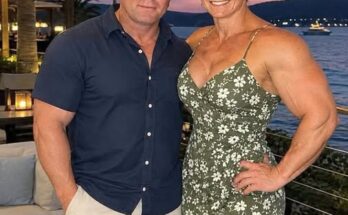
Rebecca died before me.
A stroke.
Quick.
Cruel.
She had given me twenty-one years of calm love.
At her memorial, Lily said, “Rebecca taught me that stepmothers can be safe, not because they claim motherhood, but because they respect what came before them.”
That sentence healed something old in the room.
Not all stepmothers were Vanessa.
I knew that.
Lily knew that.
But fear sometimes paints with one color.
Rebecca had helped us see more.
Mateo grew into a gentle teenager with a loud laugh.
He called Lily Mom.
Called me Grandpa.
Kept the moon keychain even when he pretended he was too old for it.
At sixteen, he told Lily a friend was being forced to sleep in a garage after his father remarried.
Lily acted immediately.
Report.
Support.
School contact.
Social services.
The boy was moved to a safe relative within days.
Mateo said, “I didn’t want to overreact.”
Lily looked at him.
“Children sleeping in garages is not something we underreact to.”
He nodded.
The sentence became another family rule.
Do not underreact to cruelty.
At seventy-eight, I moved into a small cottage near Lily.
Not because I had to.
Because Mateo said my old apartment had “lonely lighting.”
He was right.
The cottage had yellow curtains.
He chose them.
I complained they were too bright.
He ignored me.
Good.
Lily visited often.
Sometimes we sat on the porch without talking.
One evening, she said, “Dad, I need to tell you something.”
My heart still jumped at that tone.
“I used to be angry at you.”
I breathed slowly.
“I know.”
“Not only Vanessa.”
“I know.”
“I know you didn’t know. But part of me thought you should have.”
Tears filled my eyes.
“She was right.”
Lily took my hand.
“I’m not telling you to hurt you.”
“I know.”
“I’m telling you because I’m not angry like that anymore.”
I cried then.
She leaned against me.
“You spent the rest of your life listening. That mattered.”
“It didn’t erase it.”
“No.”
“But?”
“But it wrote after it.”
We sat in the yellow-curtained evening.
After.
What a beautiful word.