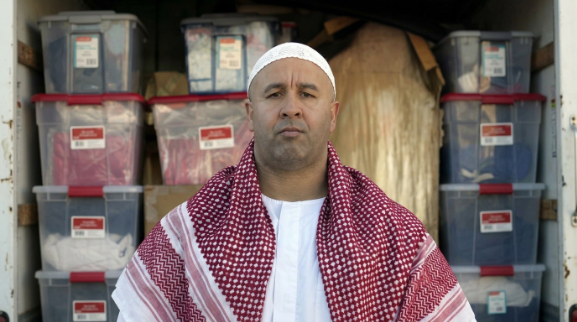
In 2006, the FBI recruited Craig Monteilh, a fitness trainer with a prior criminal record, to work as a paid confidential informant in Southern California. His assignment became part of a counterterrorism investigation known as Operation Flex, which involved gathering information within Muslim communities in Orange County.
Monteilh began attending the Islamic Center of Irvine, one of the area’s prominent mosques. According to court records and his later testimony, he presented himself as a new convert to Islam and used the name Farouk. He gradually built relationships with members of the community, attending prayers, study groups, and social gatherings.
During his time inside the community, Monteilh secretly collected information and made audio and video recordings. Court filings describe recordings made inside mosques, homes, and other private locations, as well as large collections of phone numbers and email addresses. Monteilh later said the FBI paid him approximately $177,000 for his work.
The operation took an unexpected turn when Monteilh began making statements about violent jihad that alarmed people around him. According to Supreme Court filings, members of the Muslim community reported his behavior to law enforcement, including the FBI and local police. The Islamic Center of Irvine eventually obtained a restraining order preventing him from entering the mosque.
The community did not initially know that the man they were reporting was himself working as an FBI informant. His identity and role became publicly known after an FBI agent testified in a separate federal case in 2009, confirming that Monteilh had been a confidential informant who had recorded numerous conversations.
The revelations eventually led several Muslim community members to file a lawsuit against the FBI and federal officials. The plaintiffs alleged that the government had conducted unconstitutional surveillance based on their religion and had gathered extensive information about members of the community through Monteilh’s activities. The government disputed the allegations and maintained that the investigation was part of its counterterrorism efforts.
The legal dispute eventually reached the U.S. Supreme Court in FBI v. Fazaga. In March 2022, the Court unanimously ruled on the government’s use of the state-secrets privilege, holding that the Foreign Intelligence Surveillance Act did not displace that privilege. The decision did not resolve the underlying allegations about the surveillance itself.
The case remains a significant example of the difficult balance between national-security investigations, religious freedom, privacy, and civil rights. What began as an undercover counterterrorism operation ultimately raised a much broader question: how far can the government go when investigating potential threats without infringing on the rights of an entire religious community?