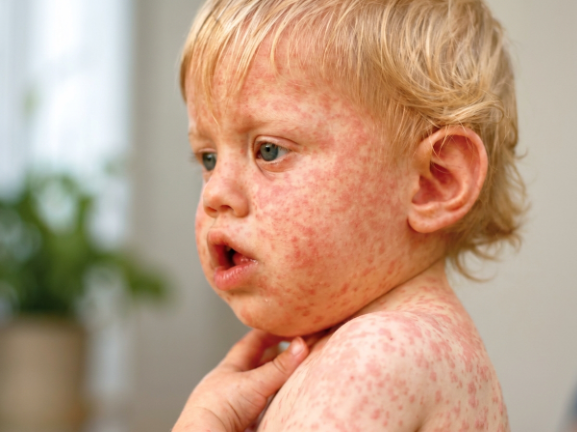
The United States has recorded its highest annual number of measles cases in 35 years, with 2,295 confirmed infections reported by late July 2026. According to data compiled by Johns Hopkins University, the country has already surpassed the total number of measles cases reported during all of 2025, making 2026 the most significant year for measles outbreaks since 1991. With several months still remaining in the year, public health officials continue to monitor the situation closely.
Health experts say the increase has been driven by multiple outbreaks that have spread across several states. Among the hardest hit are South Carolina and Utah, which together account for a substantial share of the confirmed cases. Because measles is one of the most contagious viral diseases, it can spread rapidly through the air when an infected person coughs, sneezes, or even breathes in enclosed spaces. As a result, even relatively small declines in vaccination coverage can create conditions that allow outbreaks to grow quickly.
Public health officials warn that continued transmission could place the United States’ measles-elimination status at risk. The country achieved that milestone in 2000 after decades of widespread vaccination efforts, meaning measles was no longer considered to be spreading continuously within the U.S. Although imported cases can still occur, maintaining high vaccination rates has been essential to preventing sustained outbreaks.
Health authorities continue to emphasize that vaccination remains the most effective way to prevent measles and limit community transmission. High immunization coverage not only protects individuals but also helps safeguard infants, people with certain medical conditions, and others who may not be able to receive the vaccine.
As schools reopen and more people spend time indoors during the second half of the year, researchers and public health agencies are closely tracking new cases and outbreak patterns. Officials say early detection, rapid response, and strong vaccination coverage will remain critical in reducing the spread of measles and preventing additional outbreaks throughout the remainder of 2026.