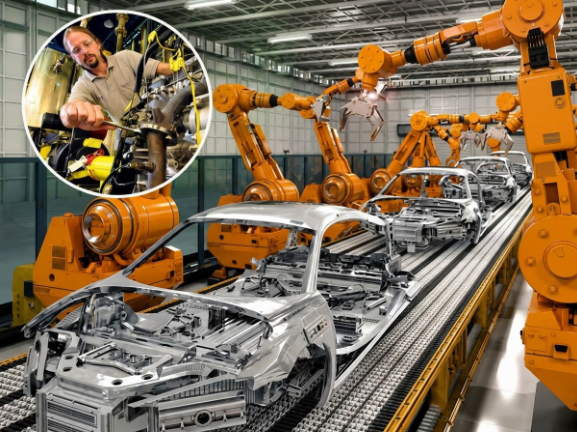
As artificial intelligence becomes increasingly common in manufacturing, Ford has concluded that technology alone is not enough to ensure the highest levels of vehicle quality. Instead of replacing experienced engineers, the company is strengthening collaboration between AI systems and veteran specialists to improve quality control and manufacturing decisions.
Ford had expanded its use of AI-powered quality control and automated inspection systems to help identify defects and improve production efficiency. While these technologies proved valuable for analyzing large amounts of data and detecting certain manufacturing issues, company executives said they were not able to consistently match the judgment developed through decades of hands-on engineering experience. According to Ford, AI sometimes struggled to recognize subtle design flaws and potential failure points that seasoned engineers could identify before vehicles entered production.
To address this challenge, Ford rehired, recruited, and promoted approximately 350 experienced engineers, including former employees and long-time technical specialists. Often referred to as “gray beard” engineers because of their extensive industry experience, these professionals now play an important role in mentoring younger engineers, leading quality reviews, and sharing practical knowledge gained over many years in automotive design and manufacturing.
Rather than replacing artificial intelligence, Ford is using these experienced engineers to strengthen it. Their expertise helps improve the quality of the data used to train AI systems, enabling the technology to make more accurate assessments while allowing human specialists to oversee complex engineering decisions that require experience and technical judgment.
According to the company, this human-AI partnership is already producing positive results. Ford recently ranked as the highest-performing mainstream automotive brand in the latest J.D. Power Initial Quality Study, while continuing efforts to reduce warranty costs and improve long-term vehicle reliability. Although AI remains an important tool for increasing efficiency and supporting manufacturing operations, Ford’s experience suggests that human expertise continues to play a critical role in delivering consistent product quality.
As manufacturers across many industries continue investing in artificial intelligence, Ford’s approach highlights a broader lesson: the most effective results often come from combining advanced technology with the knowledge and experience of skilled professionals rather than relying on automation alone.