President Donald Trump’s ambitious White House renovation program is facing growing scrutiny as questions surrounding the cost, funding and legal authority of the project continue to mount.
The controversy centers on the massive East Wing redevelopment, including a proposed 90,000-square-foot ballroom that has become one of the most closely watched construction projects in Washington.
The Trump administration has described the ballroom as an important addition to the White House, saying it will provide a larger venue for major events while incorporating extensive security features.
But the project has faced increasing questions over how much it will ultimately cost and how much of that expense could be covered by taxpayers.
Trump has repeatedly described the ballroom as a privately funded project and has publicly put its cost at roughly $400 million.
However, records reported by The Washington Post show that internal estimates prepared by the project’s contractor were substantially higher. A March estimate placed the overall construction cost at approximately $600 million, with hundreds of millions of dollars expected to come from taxpayer-funded federal agencies.
That discrepancy has become a major source of criticism.
The administration has maintained that private donors are funding the ballroom itself, while also arguing that certain security-related improvements are separate government expenses.
The White House has emphasized that the project includes security infrastructure and other features that officials say are necessary to protect the president and modernize the White House complex.
The financial questions are now unfolding alongside a separate legal battle.
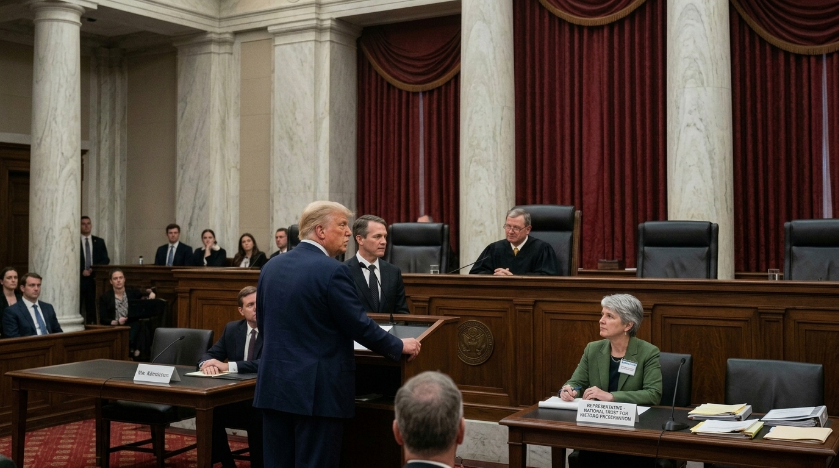
A federal appeals court recently ruled that the administration could not continue above-ground construction without congressional authorization, temporarily halting the project.
The Trump administration has responded by asking the Supreme Court to allow construction to continue while the legal dispute proceeds. Solicitor General D. John Sauer has argued that the project has significant national-security implications.
The National Trust for Historic Preservation, which challenged the project, has argued that the administration failed to follow required legal procedures before moving forward with the dramatic changes to the historic White House complex.
The financial controversy has also attracted attention on Capitol Hill.
Democratic lawmakers have called for greater scrutiny of the project’s costs and funding sources, while critics have questioned whether the administration’s original description of a privately financed ballroom accurately reflects the broader expenses associated with the renovation.
The project has also grown considerably from its original proposal.
When the ballroom was first announced, the White House described a roughly $200 million project. Trump later said the cost would be closer to $400 million, while internal contractor estimates subsequently reached approximately $600 million.
Beyond the ballroom, the administration’s broader White House construction and security plans could push the total federal spending associated with related improvements much higher.
A separate proposal has included roughly $1 billion in security and infrastructure-related spending, including White House hardening, visitor screening and Secret Service-related improvements.
That has transformed the ballroom controversy into something larger than a dispute over a new event space.
It is now a debate over how much the White House renovation will ultimately cost, who will pay for it, and how much authority a president has to make major changes to one of the country’s most important historic properties.
For Trump, the immediate legal question is whether the Supreme Court will allow construction to continue.
But even if the court allows the project to proceed, questions about its final price tag and funding are unlikely to disappear.
And that could keep Trump’s White House renovation project under intense scrutiny for months to come.