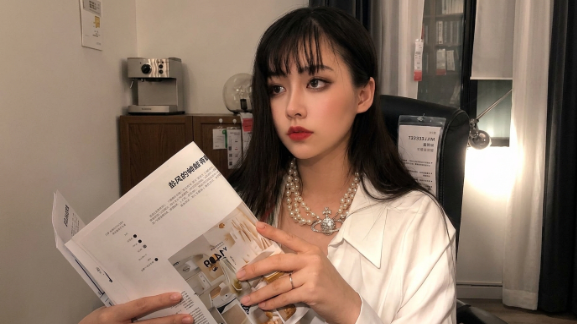
Zou Yaqi was a 23-year-old art student at the Central Academy of Fine Arts in Beijing, and she had a question: how much of the luxury reserved for China’s wealthy elite was actually about wealth, and how much was simply about looking the part?
To find out, she spent several months planning an experiment. She researched which venues in Beijing offered free hospitality to people who appeared wealthy, which hotel lobbies had plush sofas nobody would question a socialite sitting on, which brand events offered free food and wine to well-dressed guests, and which airport lounges could be accessed by someone who simply looked like they belonged.
Then she put together her costume. A fake Hermès handbag. Bright red lipstick. A velour designer tracksuit. That was essentially it.
Her first move set the tone for everything that followed. She walked into a Gucci store and asked for a free paper bag with the logo on it. They gave it to her without question. Now carrying a Gucci bag alongside her fake Hermès, she headed into Beijing’s wealthiest district.
For 21 days, she ate at exclusive buffets in VIP lounges, sipped wine at luxury brand events she had no invitation to, and slept on the plush sofas of five-star hotel lobbies without paying for a room. Wherever she went, staff assumed she belonged. Nobody asked questions. Nobody asked for payment.
She documented everything for her graduation project, which went viral across China and sparked a fierce debate about class, appearances, and how easily the perception of wealth opens doors that should require actual wealth to open.
Zou was careful to say her point wasn’t to expose wealth inequality, but to explore how society distributes its excess. “I figured I could actually survive in Beijing without spending money for 21 days,” she said. “So I pretended to be one such person and lived off these excessive materials.”
She Lived Like Beijing’s Elite for 21 Days Without Spending a Dime