November 11, 2023 — Saturday, 3:40 PM
Yellowstone National Park, Wyoming
I had spent months planning a late-autumn backpacking trip into one of Yellowstone’s quieter backcountry zones.
By November, many trails were nearly empty, the air carried the first signs of winter, and wildlife became easier to observe against the fading colors of the season.
My goal wasn’t to find wolves.
It was simply to experience Yellowstone when the crowds were gone.
I packed carefully for the colder temperatures.
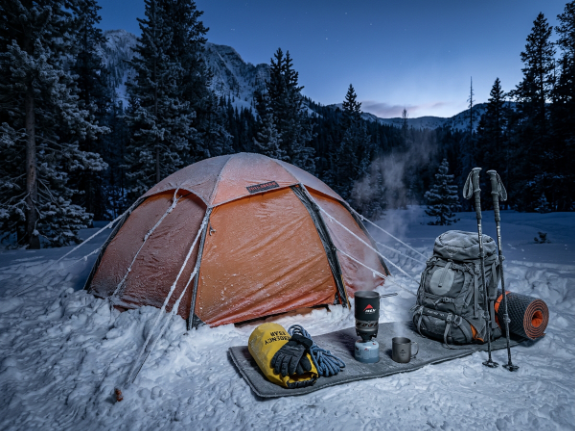
My backpack held a four-season tent, a warm sleeping bag rated well below freezing, an insulated sleeping pad, layered clothing, dehydrated meals, a backpacking stove, water filter, headlamp, satellite communicator, first-aid kit, emergency blanket, bear spray, trekking poles, and extra batteries.
Before leaving the trailhead, I checked the forecast one final time.
Clear skies.
Cold nights.
Light winds.
Perfect weather for several days in the wilderness.
The hike itself was unforgettable.
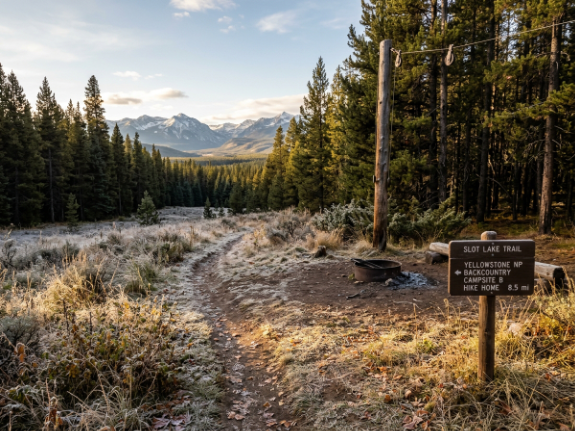
Steam drifted from distant geothermal features while frost clung to open meadows that never fully warmed beneath the weak November sun.
Fresh tracks crossed the trail every few miles.
Elk.
Bison.
Coyotes.
Once, I even noticed what looked like wolf tracks pressed into a muddy section of the trail, but they appeared old enough that I didn’t think much about them.
By late afternoon, I reached a designated backcountry campsite overlooking a wide valley bordered by dense lodgepole pine forest.
It was exactly the kind of place I had hoped to find.
Quiet.
Remote.
Beautiful.
I pitched my tent, collected water from a nearby creek, prepared dinner before sunset, and stored every scented item in the campsite’s bear pole exactly as park regulations required.
As daylight faded behind the mountains, the temperature dropped quickly.
I zipped my jacket, poured one last cup of hot coffee, and sat quietly watching the valley disappear into darkness.
Then I heard the first howl.
Before Everything Went Wrong
The howl faded as quickly as it had begun.
For several minutes, the valley became completely quiet again.
I smiled to myself.
Hearing wolves in Yellowstone had always been on my bucket list, and from that distance, the sound felt more magical than intimidating.
I finished my coffee and watched the last light disappear behind the mountains.
The temperature dropped rapidly.
By the time darkness settled over the valley, frost had already begun forming on fallen logs around the campsite.
I made one final check before going to bed.
Food hung securely from the bear pole.
Cooking equipment was packed away.
The fire was completely out.
My backpack sat inside the vestibule.
Everything was exactly as it should be.
Inside the tent, I crawled into my sleeping bag and listened to the forest settling into the night.
The occasional breeze moved through the pine trees.
A distant elk bugled somewhere across the valley.
Then another wolf howl echoed through the darkness.
This one sounded much closer.
A second howl answered almost immediately.
Then another.
The calls bounced from one side of the valley to the other, making it almost impossible to judge where they were coming from.
I reminded myself of something every ranger had repeated before my trip.
Wolves howl to communicate—not to hunt people.
Still, hearing them after dark was very different from reading about them in a guidebook.
I switched off my headlamp and tried to sleep.
About an hour later, I heard something else.
Footsteps.
Slow.
Steady.
Moving through leaves somewhere beyond the tent.
I held my breath.
The footsteps stopped.
Then continued.
Whatever was outside wasn’t running.
It simply moved through the trees as though the campsite wasn’t even there.
After several minutes, the sound disappeared.
I never opened the tent.
I had no reason to.
The safest place was exactly where I already was.

The Moment Survival Begins
Around midnight, the howling returned.
This time it came from multiple directions.
Some calls echoed from the valley below.
Others came from the forest uphill behind my campsite.
I quietly unzipped the tent just enough to look outside.
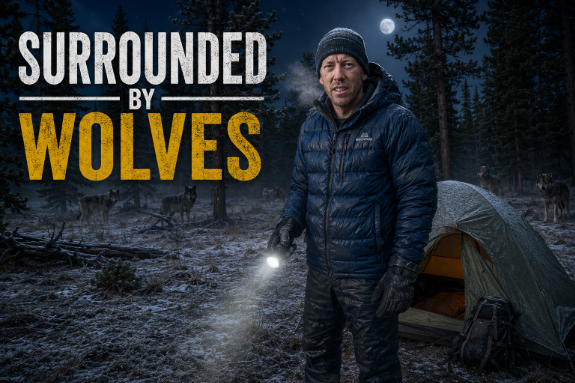
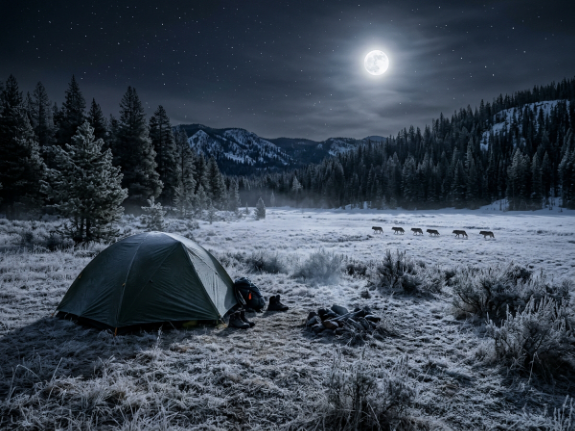
Moonlight reflected across the frost-covered meadow.
At first, I didn’t see anything.
Then movement caught my eye.
A gray shape crossed the edge of the clearing nearly a hundred yards away.
Then another.
Then another.
A small pack of wolves was traveling across the valley.
They weren’t moving toward me.
They weren’t stalking my campsite.
They simply followed one another at a calm, steady pace before disappearing between the pine trees.
I watched for only a few seconds before quietly closing the tent again.
My heart raced anyway.
Even knowing they weren’t interested in me, seeing wild wolves that close in complete darkness was unforgettable.
For the next several hours, I heard them only occasionally.
Sometimes a distant howl.
Sometimes branches snapping somewhere beyond the trees.
Once, I heard what sounded like elk running across the valley.
Nature continued its nightly routine.
I just happened to be sleeping in the middle of it.
The temptation to leave crossed my mind more than once.
The trail back to the parking area wasn’t impossible to follow.
But hiking through unfamiliar forest after midnight while wildlife remained active would have been a terrible decision.
Instead, I stayed exactly where I was.
Inside the tent.
Warm.
Quiet.
Patient.
Sometimes surviving means doing absolutely nothing.
That night, it was the smartest choice I could make.
The Fight to Survive
Sleep came only in short stretches.
Every unfamiliar sound woke me again.
A pinecone falling from a tree.
Branches rubbing together.
The distant howl of another wolf somewhere across the valley.
As the hours passed, my imagination became almost as exhausting as the cold.
Every noise seemed louder inside the tent.
I reminded myself to focus only on facts.
The wolves had stayed well away from camp.
Nothing had touched my tent.
Nothing had investigated my gear.
Everything I had observed matched normal wolf behavior.
Repeating those facts helped calm my thoughts.
Around three in the morning, I heated water for a cup of tea using my backpacking stove just outside the tent vestibule.
The warm drink helped more than I expected.
Not because it solved anything.
Because it gave me something familiar to do.
Outside, frost covered every branch.
The stars remained brilliantly clear above the valley.
Despite everything I had heard during the night, the wilderness still looked peaceful.
That contrast fascinated me.
The forest wasn’t dangerous because wolves lived there.
It simply reminded me that I wasn’t the only living creature using it.
By sunrise, the howling had completely stopped.
Birds slowly replaced the silence.
The longest night of the trip was finally over.
The Hardest Moment
After breakfast, I carefully looked around the campsite before packing.
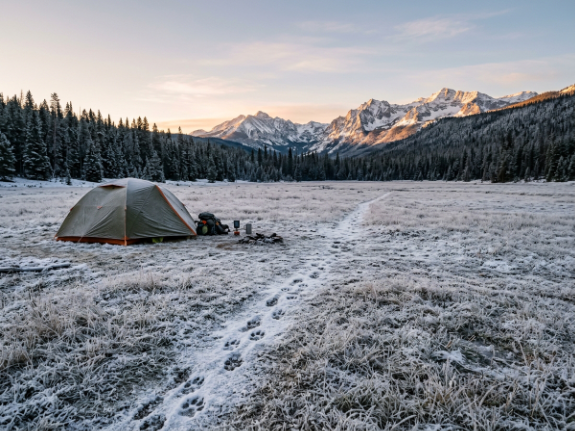
Fresh tracks covered the damp ground beyond the clearing.
Several sets of wolf tracks crossed the meadow about seventy yards from my tent before disappearing into the trees.
Seeing them in daylight gave me a completely different feeling.
The tracks confirmed what I had only heard during the night.
The pack had passed nearby.
Nothing more.
Nothing less.
I took a few photographs from a respectful distance.
Then I continued preparing for the hike out.
As I walked back toward the trailhead, I noticed even more wildlife.
Elk grazed quietly in open meadows.
A red fox crossed the trail ahead of me.
Ravens circled overhead.
Everything appeared perfectly normal.
The wilderness had never been threatening.
My uncertainty during the night had simply magnified every sound.
That realization stayed with me for the rest of the hike.
The Ending
By early afternoon, I reached the trailhead.
Before driving home, I stopped at a visitor center to tell a ranger about the wolves I had seen and heard.
The ranger smiled.
After looking at the location on my map, the ranger explained that I had camped near one of the pack’s regular travel corridors.
During autumn and early winter, wolves often move through the valley while following elk herds.
The ranger also confirmed that staying inside my tent and avoiding unnecessary movement during the night had been exactly the right decision.
Driving away from Yellowstone, I thought about how different reality had been from fear.
Before the trip, I imagined wolves as something to worry about.
After the trip, I understood them differently.
They never approached my campsite.
They never challenged me.
They never behaved aggressively.
They simply lived their lives in the same wilderness I had chosen to visit.
That cold November night taught me one of the most valuable lessons I’ve ever learned outdoors.
Real wilderness isn’t about conquering nature.
It’s about respecting it.
Sometimes the greatest survival decision isn’t fighting, running, or escaping.
Sometimes it’s staying calm, trusting my preparation, and allowing wild animals to remain exactly what they are—
Wild.