It started as a slow crunch of leaves outside my tent, followed by the unmistakable weight of something large moving through the darkness. I stayed perfectly still, hoping it would keep walking.
Instead, the footsteps stopped beside my tent.
A long, slow breath echoed through the fabric only inches from my head.
Then came the sound of claws scraping against nylon.
The next few seconds turned a peaceful camping trip into the longest night I had ever spent in the wilderness.
May 18, 2024 — Saturday, 4:45 PM
Great Smoky Mountains National Park, Tennessee
Spring is my favorite time to visit the Smoky Mountains.
The forests are alive with fresh green leaves, wildflowers cover the trails, and cool mountain air makes long hikes feel effortless. I had reserved a remote backcountry campsite weeks earlier, looking forward to three quiet days of hiking and landscape photography far from the busy front-country campgrounds.
Before leaving home, I checked the weather forecast carefully. Clear skies were expected for the first day, with only a slight chance of light rain the following evening. It sounded perfect for a solo backpacking trip.
I packed light but deliberately.
My backpack held a lightweight tent, sleeping bag, inflatable sleeping pad, compact stove, dehydrated meals, water filter, first-aid kit, rain gear, headlamp, extra batteries, emergency blanket, repair tape, and a bear-resistant food canister.
I had spent enough time in bear country to know that keeping food and scented items away from camp was essential. My meals, toiletries, and anything with a noticeable scent would stay sealed inside the canister and placed well away from where I slept.
The hike into the backcountry was everything I had hoped it would be.
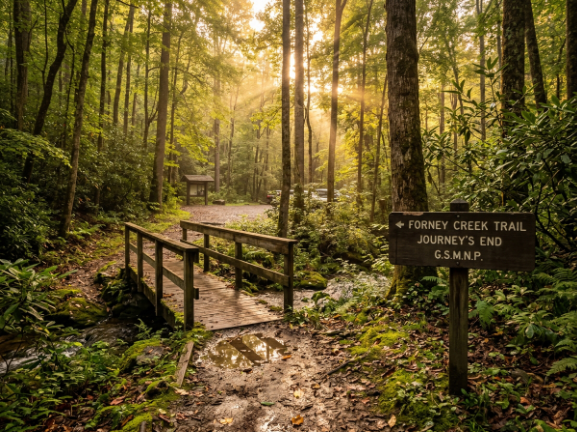
Sunlight filtered through towering hardwood trees, mountain streams crossed the trail every few miles, and birds filled the forest with constant song. The farther I walked, the quieter the world became.
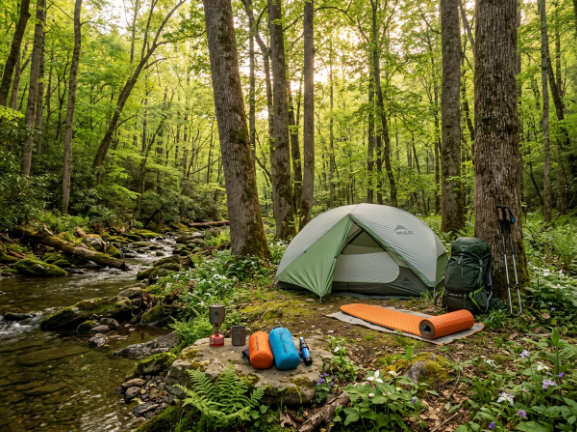
By late afternoon, I reached my campsite tucked beneath a canopy of tall oaks and tulip poplars.
I pitched my tent on level ground, gathered water from a nearby stream, cooked dinner before sunset, and carried my bear canister more than a hundred feet away from camp before settling in for the evening.
I remember feeling proud of how smoothly everything had gone.
I had no idea the most important piece of gear I owned would be destroyed before sunrise.
Before Everything Went Wrong
The campsite was exactly what I had imagined while planning the trip.
It sat on a small patch of level ground surrounded by towering hardwood trees. A narrow stream flowed only a short walk away, providing fresh water, and the forest felt wonderfully quiet. Occasionally I heard birds calling from high in the canopy or squirrels rustling through the leaves, but otherwise it was just me and the mountains.
I took my time setting everything up.
The tent went up quickly between two sturdy trees. I inflated my sleeping pad, unrolled my sleeping bag, and organized my gear so I could find everything easily after dark.
Dinner was simple.
A dehydrated backpacking meal heated on my small stove while the last sunlight filtered through the trees.
When I finished eating, I followed the same routine I always used in bear country.
Every scented item went into my bear-resistant canister.
Food.
Trash.
Toothpaste.
Cooking utensils.
Even the empty meal pouch.
I carried the canister well away from camp and placed it in an open area where a curious bear couldn’t roll it downhill or toward my tent.
Back at camp, I looked around one last time before climbing into my sleeping bag.
Everything felt right.
The weather was cool but comfortable.
The forest was peaceful.
The stars slowly appeared through small openings in the trees.
Lying there, I remember thinking how lucky I was to spend a weekend in a place like this.
Within a few hours, that peaceful feeling would disappear completely.
The Moment Survival Begins
I don’t know exactly what time I woke up.
My watch stayed inside my backpack, and I wasn’t about to search for it in the dark.
At first, I thought I had imagined the sound.
A slow crunch.
Another.
Then silence.
I held my breath.
The footsteps came again.
Heavy.
Deliberate.
Whatever was outside wasn’t small.
My heart started racing as the sound circled the tent.
I reached for my headlamp but didn’t turn it on.
For several long seconds, everything became quiet.
Then I heard it.
A loud sniff.
Another.
The animal was close enough that I could hear it breathing through the tent wall.
I immediately knew what it was.
A black bear.
The next sound was even worse.
The fabric above my feet tightened as something pushed against the side of the tent.
The poles bent.
A claw scraped across the rainfly.
Another push.
Then came a loud ripping sound.
The entire side of the tent collapsed inward.
I shouted as loudly as I could.
“Hey! Get out of here!”
At the same time, I blasted my headlamp toward the torn fabric.
The bright light startled the bear.
It jumped backward, huffed loudly, and stood still for a second while looking toward the damaged tent.
In that brief moment, I saw it clearly.
A healthy American black bear.
Not acting aggressively.
Just curious.
After another few seconds, it turned and slowly disappeared into the darkness between the trees.
I stayed exactly where I was for several minutes.
The forest became quiet again.
My breathing slowly returned to normal.
Only then did I look around.
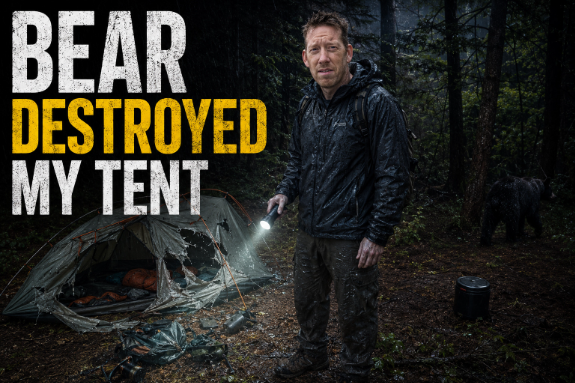
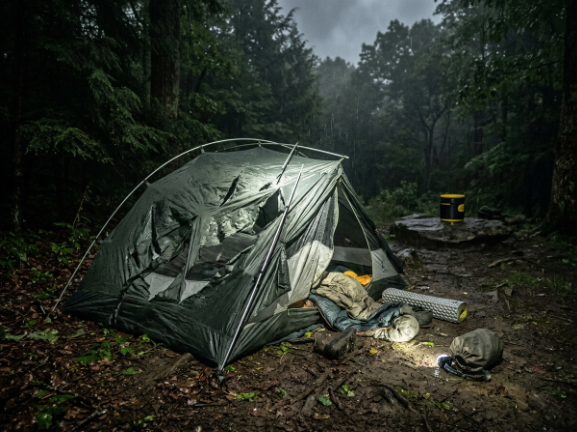
The rainfly hung in strips.
One tent pole had snapped completely.
Another was badly bent.
Large tears ran across the tent wall.
My shelter was finished.
Even if I repaired the fabric with tape, the broken poles meant the tent could no longer stand.
A light rain had already begun falling through the opening.
I suddenly realized something that made my stomach sink.
The bear hadn’t hurt me.
But it had taken away the one thing standing between me and the mountain night.
The Fight to Survive
The first decision I made was to leave the damaged campsite.
Even though the bear had wandered away, I didn’t want to spend the rest of the night where it had just been.
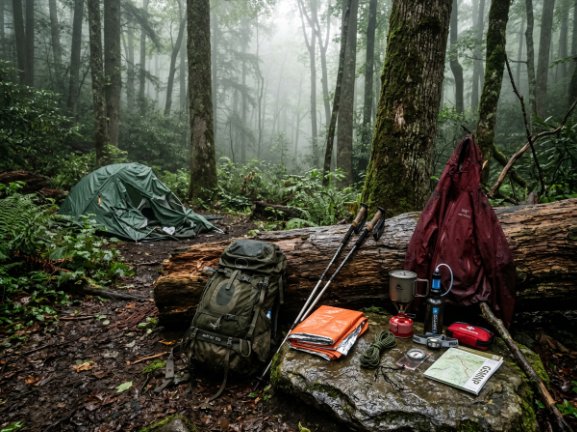
I packed only what I absolutely needed.
Sleeping bag.
Emergency blanket.
Headlamp.
Rain jacket.
First-aid kit.
The rest stayed inside my backpack.
Carrying everything through the dark forest didn’t feel safe, so I moved only a short distance to a more open area where I had better visibility in every direction.
I found a large fallen log and sat with my back against it.
Sleep wasn’t even a possibility anymore.
Every snapping twig made me look up.
Every breeze moving through the leaves sounded like footsteps.
The light rain continued for most of the night.
I wrapped the emergency blanket around my shoulders and pulled my rain jacket tightly closed.
It wasn’t comfortable.
But it helped keep enough warmth in to make it until sunrise.
Morning finally arrived, though it felt much later than it actually was.
I walked back to the campsite and inspected the damage.
The tent looked even worse in daylight.
Large claw marks covered one side.
The rainfly had been shredded.
Broken poles lay scattered across the ground.
My sleeping bag had stayed mostly dry thanks to its waterproof stuff sack, but the tent itself was beyond repair.
I knew staying another night wasn’t an option.
The trailhead was still many miles away.
I packed everything that remained usable, secured the damaged tent to the outside of my backpack, and started hiking.
The weight felt heavier than the day before.
Not because my pack had changed.
Because I hadn’t slept.
The Hardest Moment
The hike out should have taken only a few hours.
Instead, every mile seemed longer than the last.
Fatigue caught up with me quickly.
Without proper rest, even small climbs left me breathing hard.
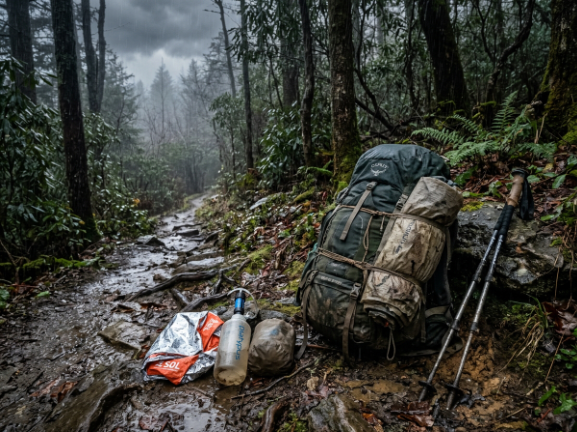
Clouds rolled over the mountains during the afternoon, bringing steady rain that soaked the trail.
The damaged tent collected water inside my pack despite my best efforts to secure it.
I stopped beneath a large rock overhang to eat the last of my trail mix and drink filtered water from a nearby stream.
For the first time since the encounter, everything caught up with me.
The adrenaline was gone.
Now all I felt was exhaustion.
I replayed the night over and over.
Could I have done something differently?
Had I forgotten something with a scent?
Was there any reason the bear chose my campsite?
The more I thought about it, the more I realized I had done what experienced hikers are taught to do.
Wild animals don’t always behave in predictable ways.
Sometimes curiosity alone is enough.
Accepting that helped me move forward.
When the rain finally eased, I stood up, adjusted my backpack, and continued down the trail.
One step at a time.
One mile at a time.
The parking area had never felt so far away.
The Ending
Late that afternoon, I rounded one final bend and caught sight of the trailhead parking lot through the trees.
I stopped walking for a moment.
Not because I was tired.
Because I couldn’t quite believe I had made it back.
My car sat exactly where I had left it the day before.
I dropped my backpack onto the ground and took one long breath.
For the first time since the bear had appeared, I finally felt safe.
Before leaving the park, I stopped at the ranger station to report what had happened.
The ranger examined several photographs I had taken of the damaged tent and thanked me for reporting the incident.
After asking a few questions, the ranger explained that black bears in the Smokies occasionally investigate campsites, even when campers follow proper food-storage practices. Curious bears sometimes paw at tents or camping gear while searching for unfamiliar scents, especially in heavily visited backcountry areas.
Hearing that didn’t erase the experience.
But it reminded me that I hadn’t survived because I was fearless.
I survived because I stayed calm.
Looking back, the most valuable lesson wasn’t about bears.
It was about preparation.
The emergency blanket, headlamp, first-aid kit, and careful decision to move away from the damaged campsite helped me stay safe through the longest night I have ever spent outdoors.
I still backpack today.
I still visit bear country.
But every time I zip up a tent after sunset, I remember that slow crunch of leaves outside my campsite.
The wilderness is beautiful because it’s wild.
That night reminded me that when I enter an animal’s home, I should always expect the unexpected.