Along Australia’s most coveted coastal stretches, particularly in New South Wales, a quiet act of environmental vandalism had been playing out for years.
Wealthy homeowners with ocean-facing properties would identify public trees on council-managed reserves that stood between them and an unobstructed view of the water. Then they would poison them, chop them down, or hire someone to do it quietly in the night. The trees would die. The view would open up. Property values would rise.
Then they would pay the fine.
For a homeowner sitting on a multi million-dollar coastal property, a council fine of a few thousand dollars was barely an inconvenience. It was cheaper than landscaping. Councils were powerless to reverse the damage, and the deterrent wasn’t deterring anyone.
So they changed the punishment.
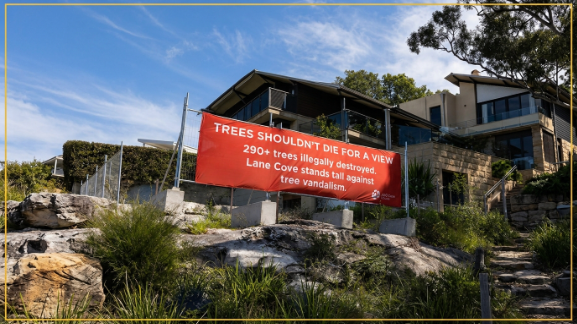
Instead of simply issuing fines, councils began installing large signs directly in the cleared area, positioned precisely where the trees had once stood, and angled to block the exact view the homeowner had paid to create. The signs announce that the area has been subject to illegal tree vandalism, warn of the penalties for such acts, and state clearly that the sign will remain in place until the vegetation has fully grown back.
They can’t be paid off. They can’t be negotiated away. They just stand there, ugly and enormous, in the window of the home that used to have a beautiful ocean view, for however many years it takes for the trees to return.
In Avalon on Sydney’s Northern Beaches, a sign went up after native banksia trees were poisoned. In Peakhurst in Sydney’s south, four trees were poisoned at Boundary Reserve and two large banners went up immediately. Councils are also offering $10,000 rewards to anyone who provides information leading to a successful prosecution.
Australia’s New Punishment for Illegal Tree Poisoning Blocks the Ocean View Instead