Honduras is one of the most storm-battered countries in Central America, sitting directly in the path of Atlantic hurricanes that roll through the Caribbean every season. So when the government decided to rebuild the old Choluteca Bridge in the mid-1990s, they went all in. They hired Hazama Ando, one of Japan’s most respected engineering firms, and told them to build something that could take whatever nature threw at it.
The bridge was completed in 1998. It was 484 meters long, state of the art, and built to withstand the most powerful hurricanes imaginable.
Later that same year, Hurricane Mitch arrived.
Mitch was a Category 5 storm that dumped 75 inches of rain on Honduras in four days, roughly six months of rainfall in less than a week. Roads vanished. Communities were cut off entirely. More than 150 bridges across the country were destroyed or severely damaged.
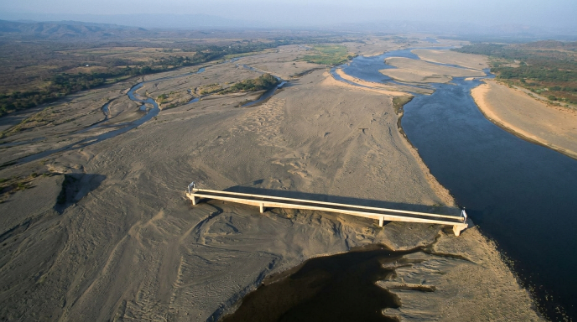
The Choluteca Bridge was not one of them. It stood almost perfectly intact, the roads on either side of it completely gone, but the bridge itself essentially untouched. The Japanese company that built it was so proud they put a photo of it on their company brochure.
Then the water receded and people noticed the problem.
The storm had been so powerful that it had physically rerouted the Choluteca River. The river no longer flowed under the bridge. It had carved a new channel beside it. The bridge, engineered to survive anything, was now standing over dry land.
It became known as The Bridge to Nowhere. Engineers eventually reconnected it to the highway in 2003, though by then the river had moved far enough that the bridge no longer served its original purpose.
A Hurricane Couldn’t Destroy This Bridge—It Moved the River Instead