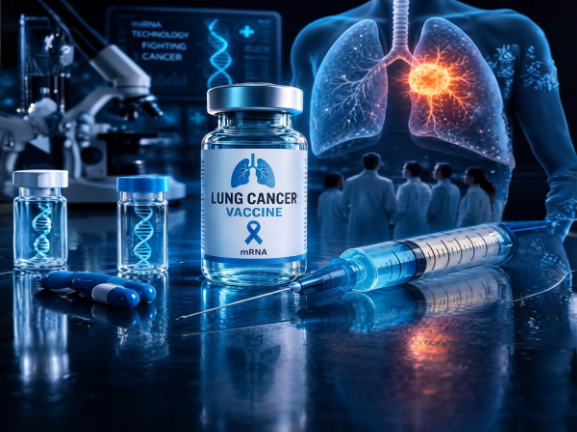
Lung cancer remains the leading cause of cancer-related deaths worldwide, but researchers are investigating a new treatment that could transform how the disease is managed. Using the same messenger RNA (mRNA) technology that gained global attention during the COVID-19 pandemic, scientists are testing an experimental vaccine designed to help the body’s immune system recognize and attack lung cancer cells.
Developed by BioNTech, the vaccine—known as BNT116—is intended to treat non-small cell lung cancer (NSCLC), the most common form of lung cancer. Unlike traditional chemotherapy, which can damage both healthy and cancerous cells, BNT116 is designed to deliver mRNA instructions that teach the immune system to identify specific markers found on cancer cells. Once these markers are recognized, immune cells can target and destroy cancer cells while largely sparing healthy tissue.
The treatment is currently being evaluated in a Phase 1 clinical trial involving approximately 130 participants at 34 research centers across seven countries: the United Kingdom, the United States, Germany, Hungary, Poland, Spain, and Turkey. The study includes patients with different stages of NSCLC, ranging from those who have recently undergone surgery or radiation therapy to individuals whose cancer has returned or progressed. Researchers are also testing the vaccine in combination with immunotherapy to determine whether the two treatments can work together to produce a stronger immune response.
The first participant enrolled in the United Kingdom was 67-year-old scientist Janusz Racz, who received his initial treatment in London. During his first visit, he was given six injections administered five minutes apart, with each injection containing a different mRNA sequence. After the initial treatment, he began a maintenance schedule that is expected to continue for more than a year as researchers monitor the vaccine’s safety and effectiveness.
If the clinical trial produces positive results, BNT116 could become a new option for reducing the risk of lung cancer returning after treatment. Researchers are also exploring whether similar mRNA-based vaccines could eventually be used to help prevent lung cancer in people considered to be at high risk of developing the disease.
Although the vaccine is still in the early stages of clinical testing and its effectiveness has not yet been established, the trial represents an important step in the development of personalized cancer treatments. Scientists hope that advances in mRNA technology could eventually lead to new therapies for lung cancer as well as many other forms of cancer, offering more targeted treatments with fewer side effects than conventional approaches.