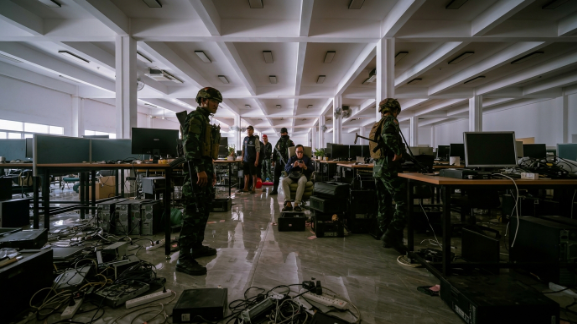
For years, Myanmar’s border regions have been home to a sprawling criminal economy unlike anything else on earth. Massive compounds, some the size of small cities, have been built along the Thai and Chinese borders, staffed by tens of thousands of workers running romance scams, cryptocurrency fraud, and investment cons targeting people across the globe.
The catch is that many of those workers never chose to be there.
Investigators and survivors have documented widespread human trafficking into the compounds. People from over 80 countries have been lured with fake job offers, then stripped of their passports, beaten, and forced to run fraud operations under threat of violence. Those who refused to meet quotas were tortured. Those who tried to escape were sold to other compounds.
The scale of the operation is staggering. The United Nations Office on Drugs and Crime estimates that scam compounds across Southeast Asia generated between $88 billion and $114 billion in losses in 2025 alone, with Myanmar’s operations at the center of it.
On July 28, 2026, Myanmar’s military-backed parliament passed the Anti-Online Scam Bill, the first law passed by the country’s new government. The legislation introduces the death penalty for operators who use violence, torture, or unlawful detention to force workers into running scams, and mandates capital punishment if that abuse results in a victim’s death. Running a scam center carries a maximum sentence of life in prison. Crypto fraud operations face the same.
It is a significant escalation. Myanmar resumed judicial executions in 2022 for the first time since 1976, and the new law creates a legal framework to apply that punishment specifically to the fraud industry that has made the country infamous.
Myanmar Passes New Anti-Scam Law as Border Fraud Compounds Face Harsh Penalties