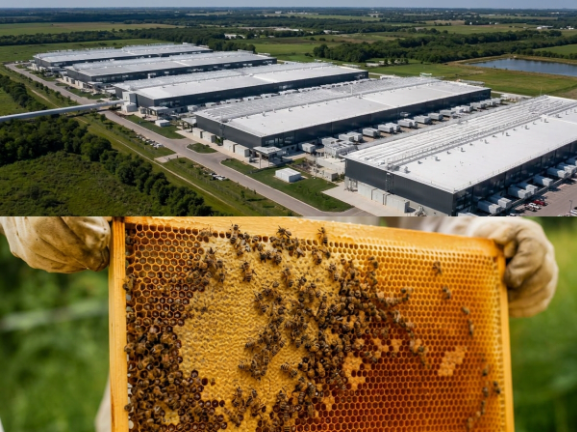
The rapid growth of artificial intelligence is driving an unprecedented wave of data center construction around the world. While these facilities are essential for supporting AI, cloud computing, and digital services, they have also raised concerns about their environmental impact. Researchers, environmental organizations, and local communities are increasingly calling for careful planning to ensure that technological expansion does not come at the expense of natural ecosystems.
Modern data centers require large amounts of electricity to power thousands of servers around the clock. Many also use substantial quantities of water for cooling, with some facilities consuming millions of liters each day depending on their size, cooling systems, and local climate. In addition, new data centers often require significant amounts of land, prompting discussions about how future developments can avoid damaging forests, reducing biodiversity, or placing additional pressure on limited water resources.
Among the environmental concerns is the protection of pollinators such as bees. Bees play a vital role in ecosystems by pollinating many wild plants and agricultural crops, supporting the production of approximately one-third of the world’s food supply. Scientists widely recognize that habitat loss, pesticide exposure, climate change, parasites, and disease are the primary factors contributing to declining bee populations in many regions.
Some researchers have also begun exploring whether electromagnetic fields and other environmental changes associated with large data centers could influence bee behavior. At present, however, the available scientific evidence remains limited, and no direct causal relationship has been established. Further research is needed before any conclusions can be drawn about the potential effects of data center infrastructure on pollinators.
Despite these ongoing studies, many experts agree on a broader principle: technological innovation and environmental stewardship should advance together. Through thoughtful site selection, efficient cooling technologies, renewable energy, responsible water management, and habitat conservation, it is possible to expand digital infrastructure while reducing its environmental footprint.
As demand for artificial intelligence continues to grow, the challenge will be finding solutions that support technological progress without compromising healthy forests, clean water, biodiversity, or the ecosystems that communities and wildlife depend on. Sustainable planning will play an important role in ensuring that future development benefits both society and the environment.