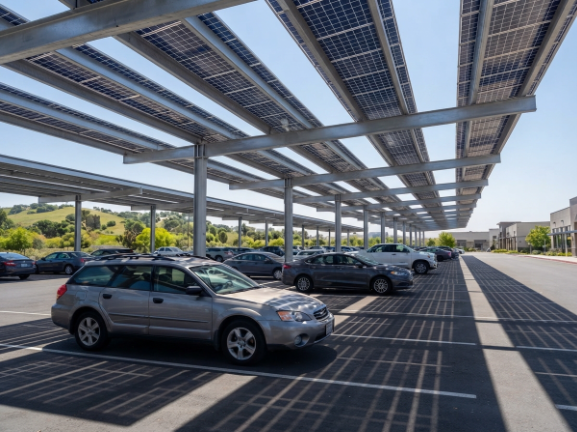
France is taking an innovative approach to expanding renewable energy by turning ordinary parking lots into solar power hubs. Through legislation introduced in July 2023, the country aims to make better use of existing infrastructure while increasing clean electricity generation without placing additional pressure on farmland or undeveloped land.
Under the new law, parking lots with 80 or more spaces must install solar canopies over at least 50% of their total area. Parking facilities with more than 400 spaces are required to meet the new standards by 2026, while smaller qualifying lots have until 2028 to comply. The policy is designed to encourage the widespread adoption of solar energy by utilizing spaces that already receive significant amounts of sunlight throughout the year.
The idea is simple yet highly effective. Instead of constructing large solar farms on agricultural or natural land, solar panels are installed above parking areas that are already developed. This approach allows renewable electricity to be generated without changing how the land is used, making it a practical solution for increasing solar capacity.
Experts estimate that covering just half of France’s parking lots with solar canopies could add between 6.75 and 11.25 gigawatts of solar generating capacity. That amount of electricity is roughly comparable to the output of about ten nuclear reactors, demonstrating the significant renewable energy potential of existing parking infrastructure.
The advantages extend well beyond electricity generation. Solar canopies provide shade for parked vehicles, helping to reduce surface temperatures and lessen the urban heat island effect in densely populated areas. They also protect vehicles from prolonged exposure to sunlight, heavy rain, and hail, while keeping car interiors cooler during hot weather. For electric vehicle owners, cooler vehicles may require less energy for air conditioning after being parked in direct sunlight, helping to improve overall energy efficiency.
France is not the only country exploring this concept. South Korea is also moving toward requiring solar installations on large public parking lots, while countries with extensive parking infrastructure, including the United States, have the potential to generate substantial amounts of renewable energy by making better use of land that has already been developed.
France’s policy demonstrates how practical planning and existing infrastructure can work together to support the transition to cleaner energy. By transforming parking lots into dual-purpose spaces that generate electricity while serving everyday transportation needs, the country is providing an example of how simple ideas can make a meaningful contribution to a more sustainable future.