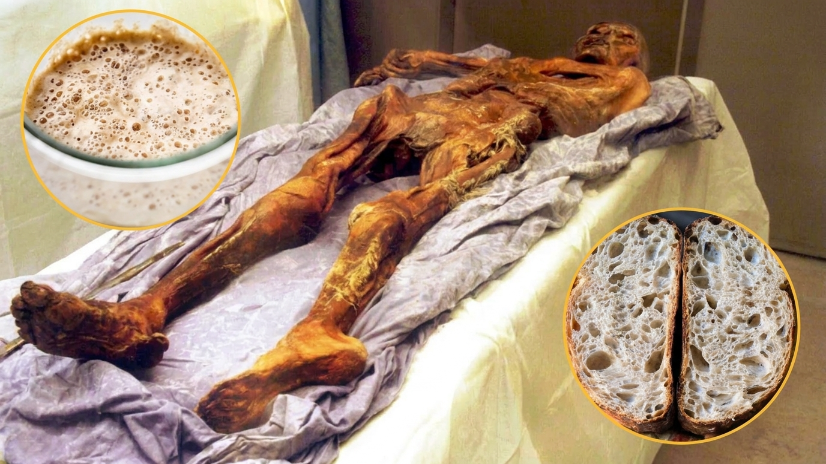
In September 1991, two German hikers exploring the Tyrolean Alps near the border of Austria and Italy stumbled across a human body emerging from the ice.
He was 5,300 years old.
Scientists named him Ötzi the Iceman. Analysis revealed he was around 45 years old when he died, carried a copper axe, had ten different people’s blood on his tools and clothing, and had been shot in the shoulder with an arrow. His body froze almost immediately and stayed frozen for over five millennia before the hikers found him.
Since 1991 he has been kept at the South Tyrol Museum of Archaeology at minus six degrees Celsius, the same temperature as his glacial tomb.
Researchers have studied him extensively. They know he was going bald. He had tattoos. He was lactose intolerant. He ate ibex and red deer and grains for his last meal.
And as of this week, thanks to a study published in the journal Microbiome, scientists now know something else…
He still has living yeast in his stomach.
A team at Eurac Research in Bolzano, Italy extracted samples from Ötzi’s gut and found cold-adapted yeast that had been quietly surviving in his frozen body for thousands of years. The DNA damage levels confirmed the microbes had entered his body shortly after death and had been there ever since.
They grew the yeast in a fridge.
Then someone asked the obvious question.
“If you tell anyone you have yeast, they immediately ask: can we use it for bread?” lead researcher Mohamed Sarhan told AFP.
So they tried. It didn’t work at first. After three months of effort they finally got it right.
“We had a very, very good sourdough,” Sarhan said.
When asked what was next, he didn’t hesitate.
“Brewing beer. It’s on the list.
They Found Ancient Yeast in a Mummy… Of Course Someone Tried Baking With It 🤣