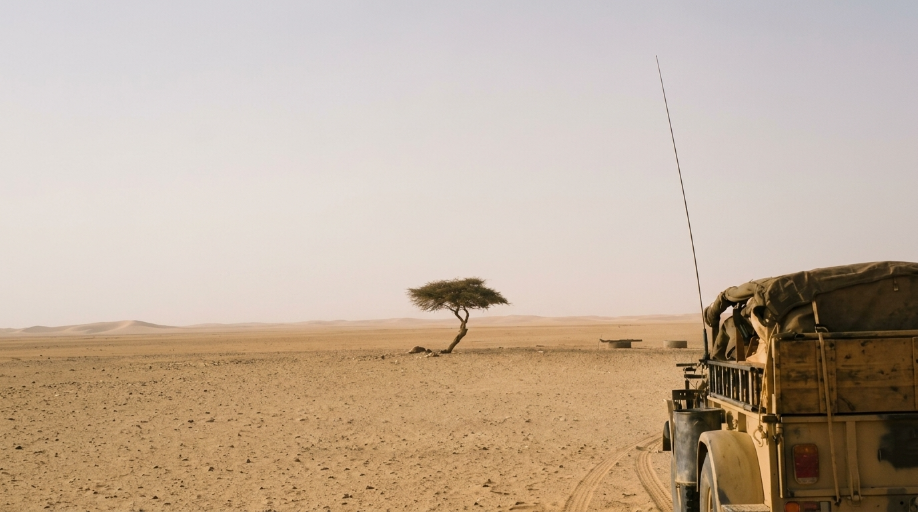
In the heart of the Sahara, in a barren stretch of Niger so empty it is called the desert within the desert, there once stood a single tree. It was an acacia, and it was completely, almost impossibly, alone. There was not another tree for 250 miles in any direction. Just sand, sky, and this one stubborn survivor.
It was known as the Tree of Ténéré, and for around 300 years it clung to life where nothing else could. Its secret was underground. Its roots stretched more than 100 feet down to reach a hidden pocket of groundwater, letting it drink while the surface baked and cracked above.
The tree was far more than a botanical curiosity. In a landscape with no roads, no signs, and no landmarks, it was a lifeline. Caravans of Tuareg traders used it as a navigational beacon, the first or last marker on the brutal crossing between oases. It was so revered that travelers refused to cut its branches for firewood, even when desperate. It appeared on maps of the region where no other tree ever would.
For centuries it endured sandstorms, droughts, and blistering heat, and never fell.
Then came 1973. A Libyan truck driver, reportedly drunk, was making the long, empty drive across the desert. With nothing but open sand for hundreds of miles in every direction, and only one solid object in the entire landscape to avoid, he somehow drove straight into it. The impact knocked down the loneliest tree on Earth.
Its remains were carried to the National Museum of Niger in the capital, Niamey, where the dried trunk is still preserved today. Out in the desert, a simple metal sculpture now stands where the real tree once did.
A tree that survived three centuries of the harshest place on the planet, undone in an instant by the one thing the desert could not throw at it. A drunk man behind the wheel.
The Tree of Ténéré: The World’s Loneliest Tree That Survived 300 Years in the Sahara