WASHINGTON — August 13, 2026 — A major confrontation is developing between the United States and Iran over the Strait of Hormuz, one of the world’s most strategically important waterways and a critical route for global energy shipments.
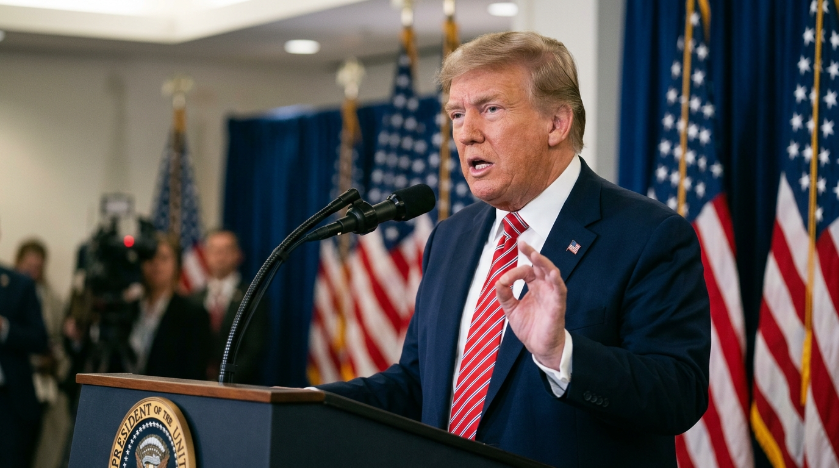
President Donald Trump has claimed that the United States has “total control” of the strategic strait, while an Iranian Basij commander has publicly rejected that claim, saying the waterway remains under Iranian control.
The competing statements have added another layer of tension to the already strained relationship between Washington and Tehran.
Why the Strait of Hormuz Matters
The Strait of Hormuz is a narrow waterway connecting the Persian Gulf with the Gulf of Oman and the Arabian Sea.
It is one of the most important energy corridors in the world, with large volumes of oil and other energy products moving through the passage.
Any serious disruption could affect international energy markets, shipping costs and fuel prices around the world.
That makes the security of the strait a major concern not only for the United States and Iran, but also for energy-importing countries across Asia, Europe and other regions.
Trump Claims U.S. Control
Trump has asserted that the United States has established control over the strategic waterway.
His statement reflects the administration’s broader effort to project American military power in the region and maintain freedom of navigation through critical maritime routes.
For Washington, keeping the waterway open is closely connected to energy security and the movement of international commerce.
Iran Rejects the Claim
Iranian officials have strongly disputed Trump’s characterization.
A Basij commander said Thursday that the Strait of Hormuz remains under Iranian control, directly challenging the U.S. president’s statement.
The competing claims highlight the uncertainty surrounding the security situation in the region.
While Washington is emphasizing American military capabilities, Tehran continues to portray the waterway as an area where Iran retains significant strategic influence.
A Critical Test of Deterrence
The dispute is about more than who gets to claim control of a waterway.
The Strait of Hormuz has long been viewed as a potential pressure point in any confrontation between Iran and Western powers.
Iran has repeatedly demonstrated that it views the strait as an important component of its national security strategy, while the United States has emphasized freedom of navigation and protection of international shipping.
The latest exchange therefore raises questions about whether the competing claims could lead to further military or diplomatic escalation.
Potential Impact on Energy Markets
Any prolonged disruption in the Strait of Hormuz could have consequences far beyond the Middle East.
Energy markets closely monitor developments around the waterway because of its importance to global oil and gas shipments.
A major interruption could increase transportation costs and create uncertainty for energy companies, governments and consumers.
For American households, a sustained increase in global energy prices could eventually affect gasoline and other costs.
What Happens Next?
The immediate question is whether the competing claims remain rhetorical or develop into a broader confrontation.
The United States is likely to continue emphasizing freedom of navigation and the protection of international shipping.
Iran, meanwhile, has shown little indication that it intends to surrender its claim of influence over the waterway.
With both sides publicly presenting sharply different versions of who controls the Strait of Hormuz, the strategic waterway is once again at the center of international attention.
The next moves by Washington and Tehran could determine whether the current confrontation remains a war of words — or becomes something much more serious.